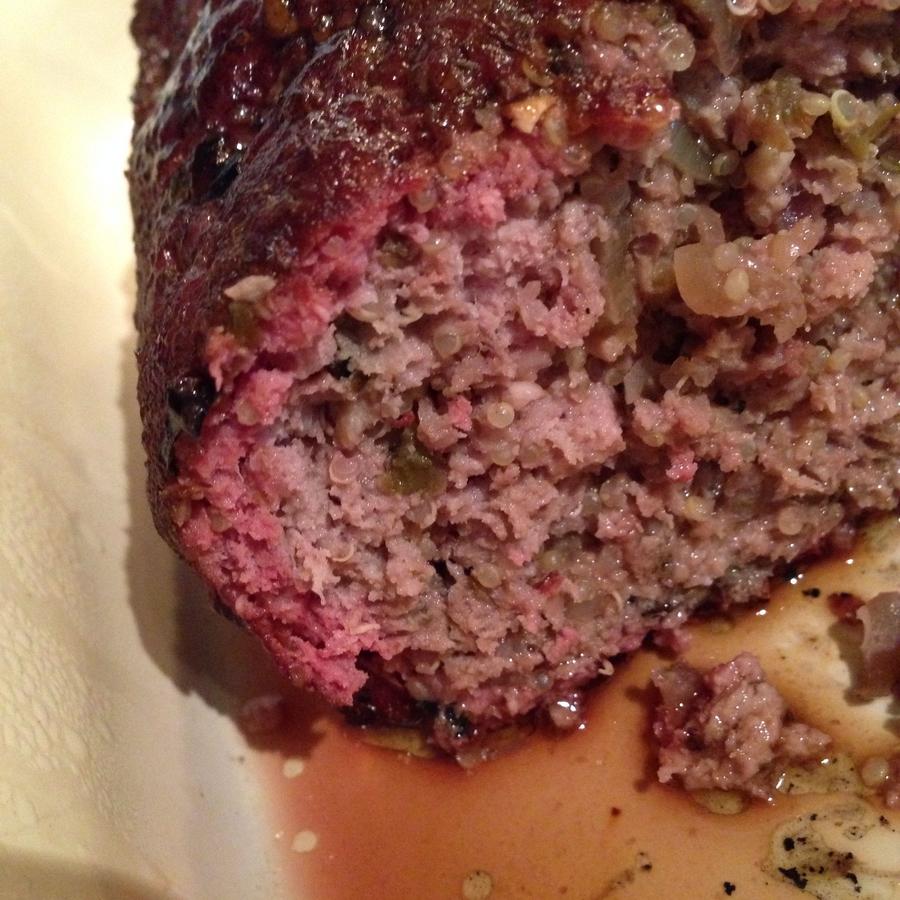
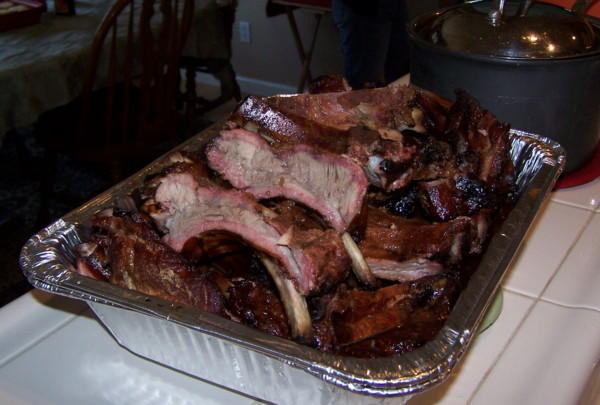
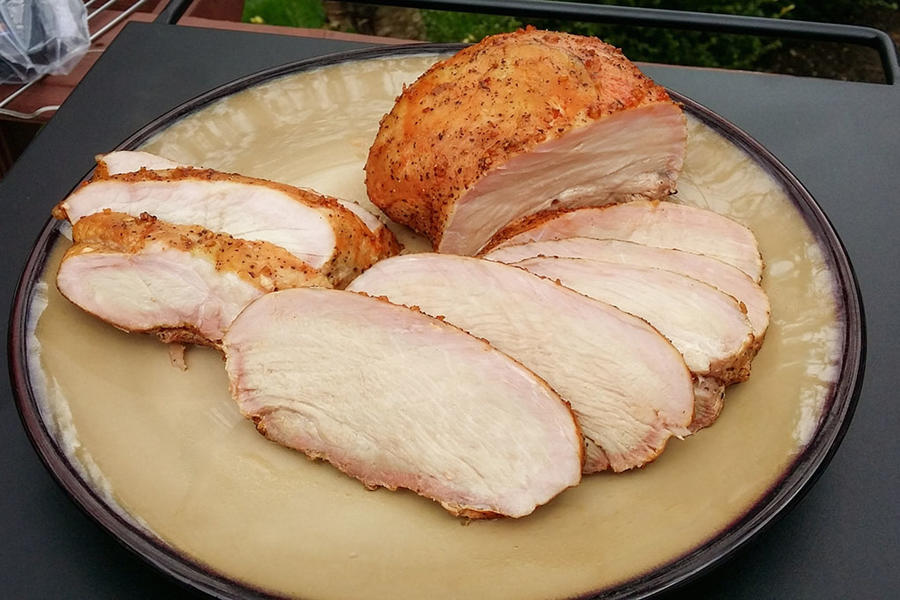
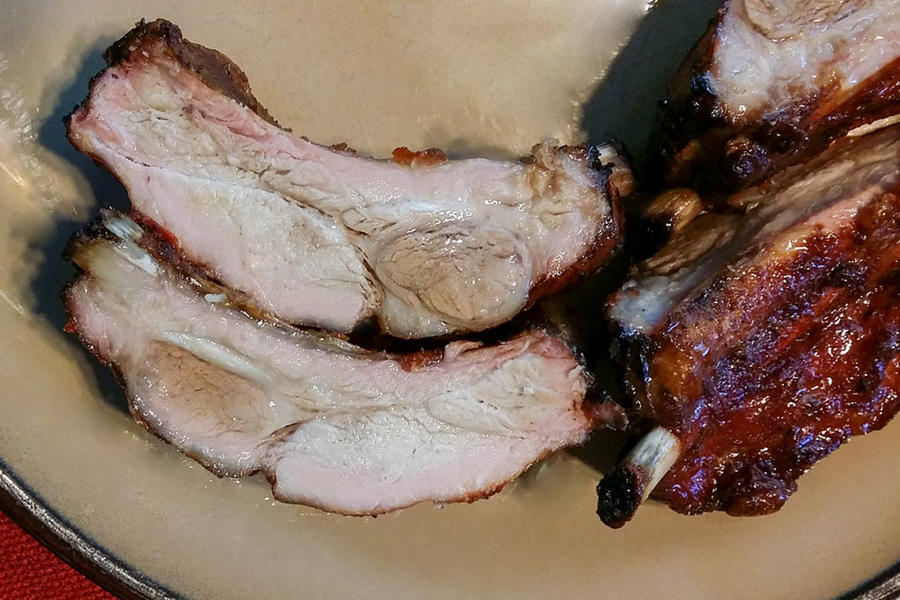
Unless you are using a stick burner or a charcoal fired smoker you wont get much of a smoke ring. Electric and propane smokers don't produce much if any of a smoke ring.
"The smoke rings is caused by nitric acid building up in the surface of meat, absorbed from the surface. This nitric acid is formed when nitrogen dioxide from wood combustion in smoke mixes with water in the meat. Basically it is a chemical reaction between the smoke and the meat.
It turns out that burning organic fuels like wood, charcoal or gas produces a variety of chemicals, including trace amounts of nitrogen dioxide (NO2) gas. When NO2 gas meets the surface, it dissolves into the meat and picks up a hydrogen molecule, becoming nitrous acid (HNO2), which then gets converted into nitric oxide (NO). NO reacts with myoglobin, and together they form a stable pink molecule that can withstand heat.
[sup]1[/sup] The thickness of the ring depends on how deep into the meat the NO is able to penetrate before reacting with myoglobin.
As you can imagine, this reaction has to occur fairly early in the cooking process, before the surface of the meat reaches temperatures that would denature myoglobin. Since smoking cooks meat with gentle temperatures, this reaction has more time to occur before myoglobin is lost. Even though gas and charcoal are commonly used for grilling, you wouldn't see the smoke ring occur in grilled meats because the heat in that application is so high that the reaction doesn't have time to occur before the myoglobin around the edges is lost.
In fact, a similar reaction occurs in
nitrite-cured meats like ham, corned beef, and hot dogs. That's what gives those meats their uniquely pink color!
[h4]Notes[/h4]
1. Harold McGee,
On Food and Cooking: The Science and Lore of the Kitchen (New York: Scribner, 2004), 148-149."