dry cure question

  • Some of the links on this forum allow SMF, at no cost to you, to earn a small commission when you click through and make a purchase. Let me know if you have any questions about this.
SmokingMeatForums.com is reader supported and as an Amazon Associate, we may earn commissions from qualifying purchases.

ldrus

Smoking Fanatic
Original poster
OTBS Member
Jul 16, 2007
621
17
Westville, Indiana
I have my bellies during in fridge doing a dry cure method was wondering am I supposed to drain
The water that is being pulled from the meat or let it go until smoking time?
 
I usually drain it.
The liquid can have a tendency to toughen the meat if left in contact.

Cheers, peace and bacon grease,

~Martin
yeahthat.gif
 
I usually drain it.
The liquid can have a tendency to toughen the meat if left in contact.

Cheers, peace and bacon grease,

~Martin
Martin, morning....  Evidently there is a difference between the liquid drawn from the meat when curing and the liquid if one was to use a brine/cure/pumped/massaged solution... 

This is the first I have heard that....  Can someone explain what the difference is and maybe why that happens....   Dave
 
Evidently there is a difference between the liquid drawn from the meat when curing and the liquid if one was to use a brine/cure/pumped/massaged solution... 

Yes, it's the liquid that's exuded from the meat that's the issue, nothing to do with brine.

I can't explain scientifically why it happens, but based on experience and anecdotal evidence the liquid can have a tendency to not only toughen the meat it can also lead to ugly discoloration, as in the skin on a dry cured ham or dry cured bacon. I suspect it has to do with the soluble proteins in the liquid. I'm sure that BriCan will back me up on this.


~Martin
 
Last edited:
The weather is cooling and the bellies in the freezer are calling my name....  I will do a test of dry and brined.... Same recipe etc on each except for the water...  I will force myself to eat bacon cured different ways until I perfect it...  
yahoo.gif
 ..... 
 
  • Like
Reactions: shannon127
Yes, it's the liquid that's exuded from the meat that's the issue, nothing to do with brine.
I can't explain scientifically why it happens, but based on experience and anecdotal evidence the liquid can have a tendency to not only toughen the meat it can also lead to ugly discoloration, as in the skin on a dry cured ham or dry cured bacon. I suspect it has to do with the soluble proteins in the liquid. I'm sure that BriCan will back me up on this.
~Martin
The only way to explain the liquid that some think of as a 'brine' (liquid) that is produced when dry curing is that of as osmosis --- salt pulls the liquid out and at the same time pulls in the spice combination (that's if you use a spice combination)

What Martin has said about the hardness and discoloration is absolutely right in the trade we know it as a "nitrite burn" when excessive cure is used in one place, sitting in the liquid that comes off the product has a tendency to do this which is why there was a use of salting tables that was made out of marble that sloped to the front where there was a grove to carry away the liquid also the table was pitched to the left

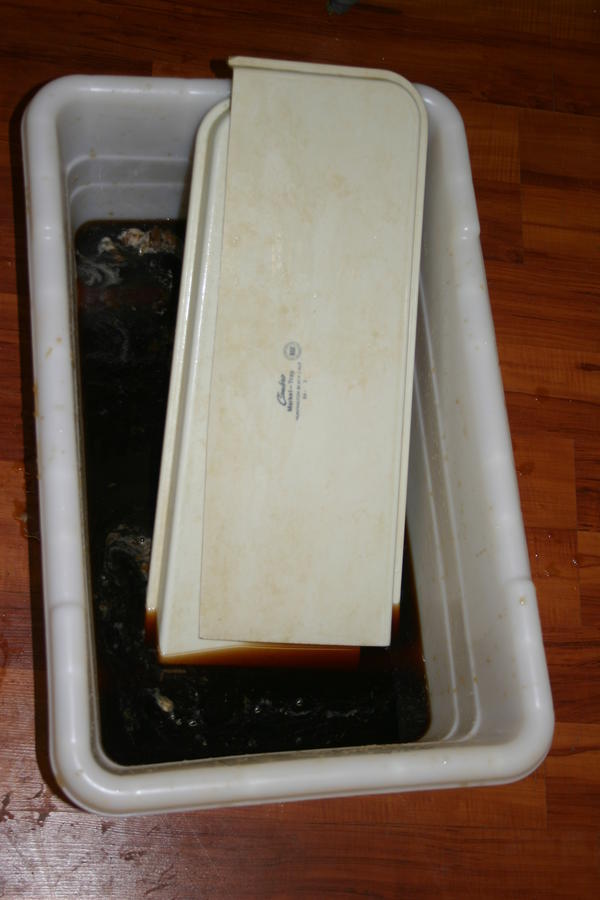
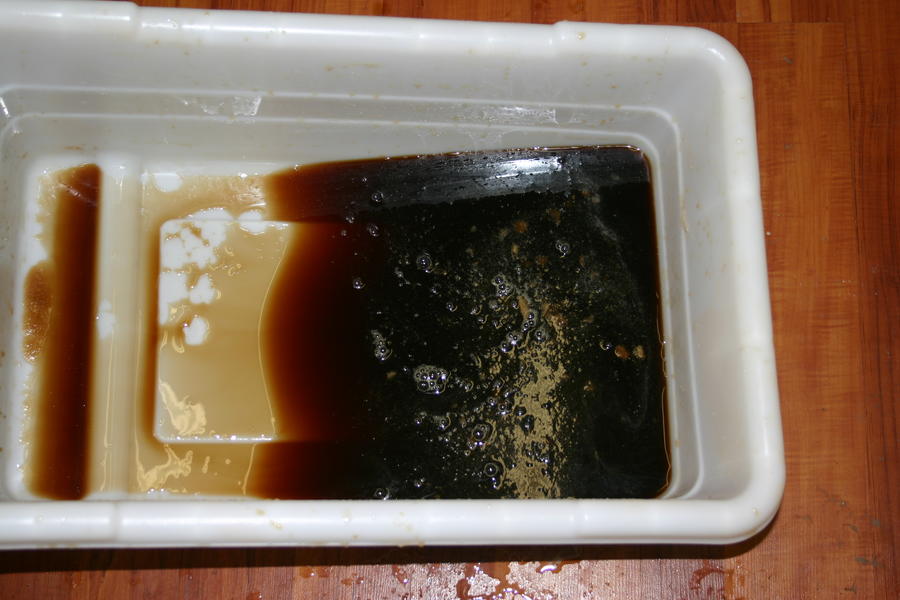
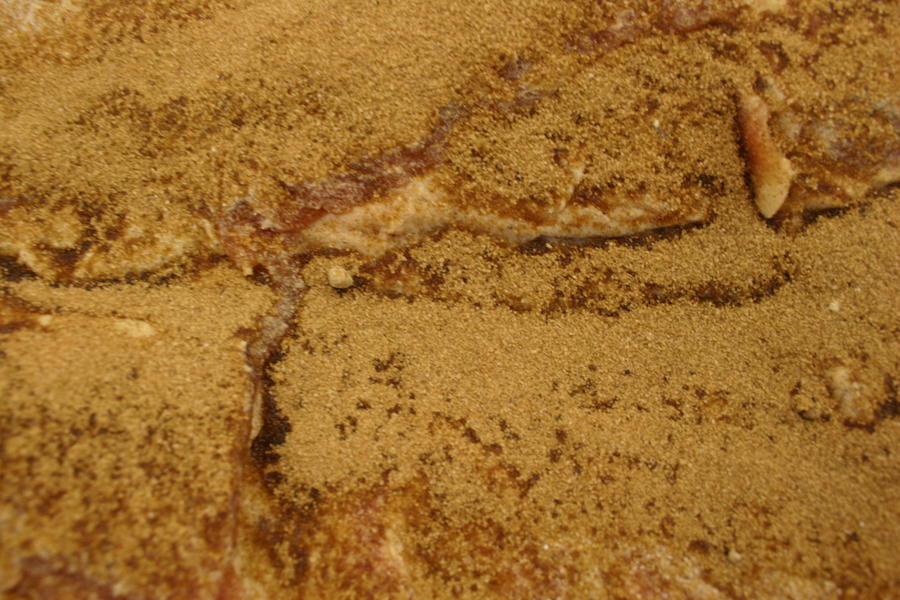
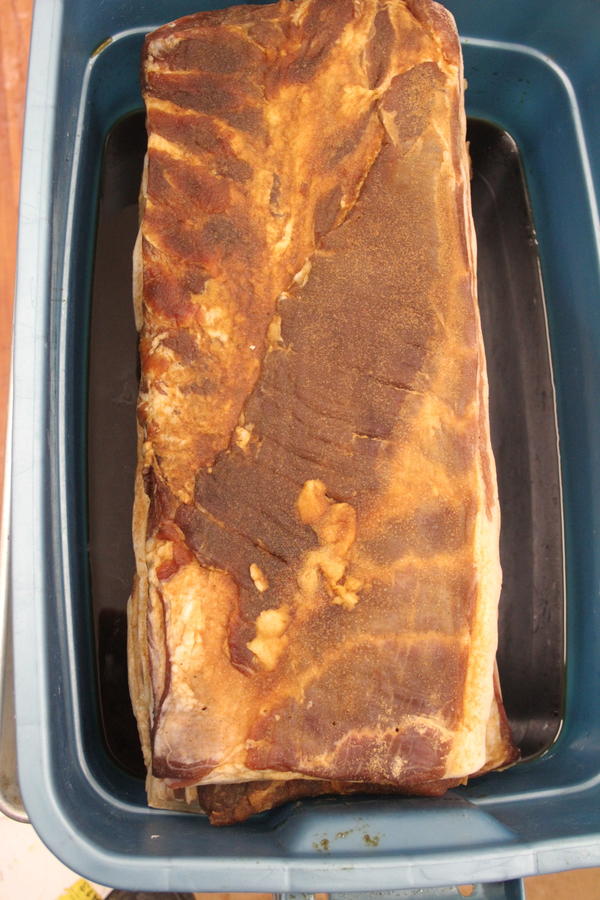
How much liquid can come out of bacon when dry curing depends on how fresh your pork is, the fresher it is the more liquid that comes out. The following are shots taken from my curing process which is an ongoing process each week


This is the liquid that has been drawn off my Irish bacon (dry cured) from 8 loins


Maple bacon that is only an hour into curing -- notice the liquid already starting to be released from the belly


One week later

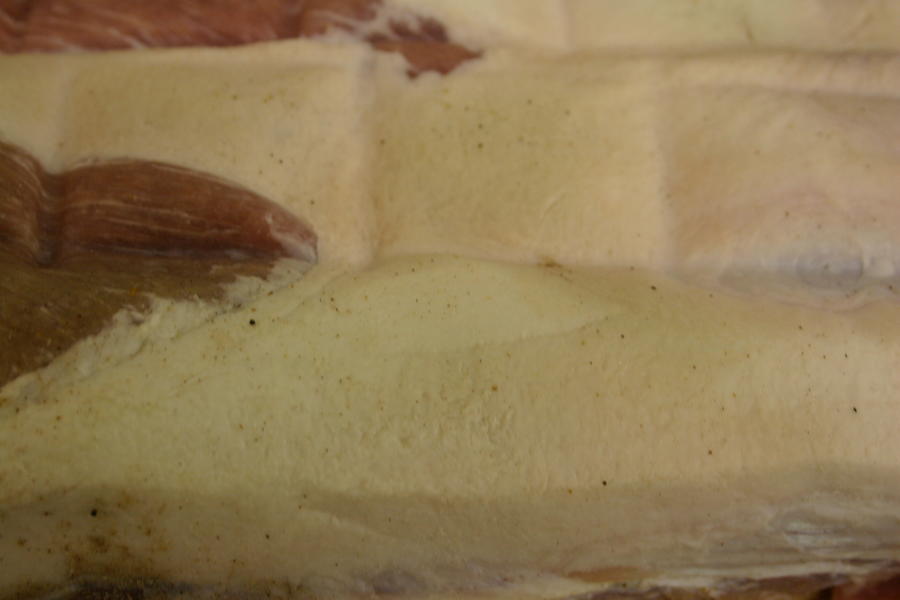
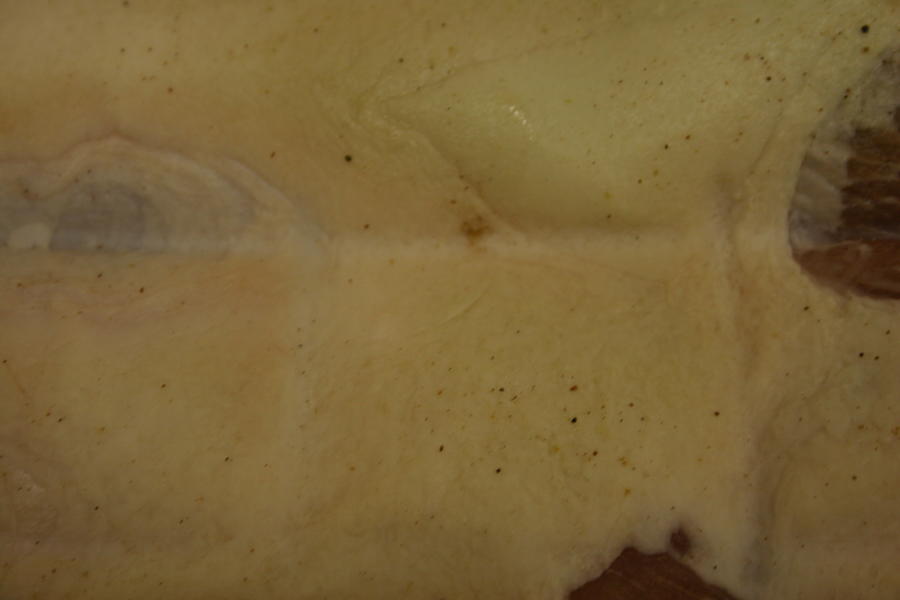
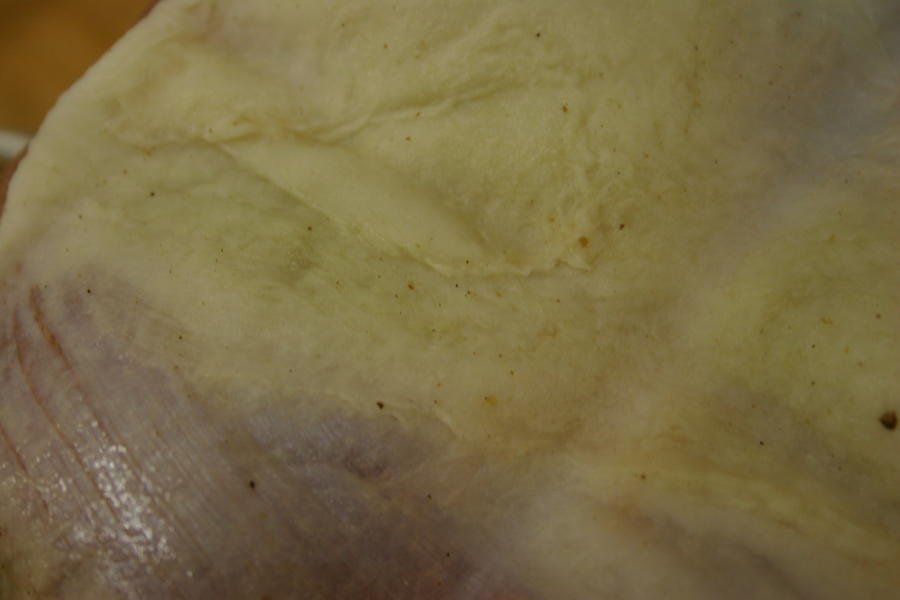
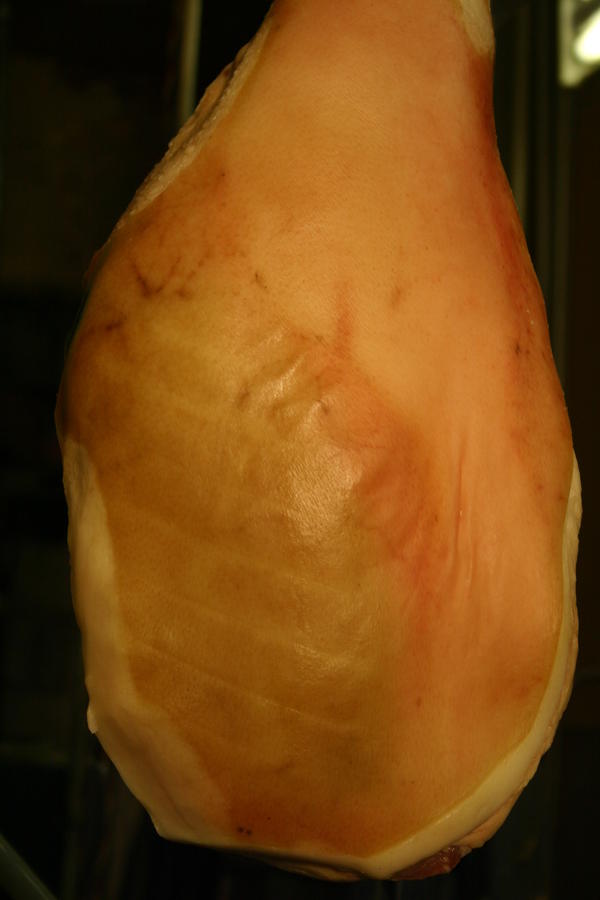
The following are of nitrite burn


The nitrite burn on the leg can be seen on the lower left

The following was taken from

 http://www.jlindquist.net/generalmicro/324sausage.html

The excessive amount of nitrite, in the presence of the lactic acid, will cause severe oxidation of the meat pigment (myoglobin), producing a green pigment (oxymyoglobin). This form of greening of cured meats is referred to as nitrite burn."
 
Thanks Robert!!!
I had forgot about how oxidation plays a part, that explains why nitrite burn doesn't seem to be an issue when the meat and dry cure are vacuum packed....I think you mentioned that on another forum?!

FWIW,

Here's a pic of a 19th century French "Saloir" for curing hams designed so that the liquid easily drains away.

QeyNG.png


~Martin
 
So.... If the meat is vac-packed, there will be no oxidation and nitrite burn will be eliminated.... Is that what I am reading ??  Then along with that, submerged brining will eliminate nitrite burn also....  

And using a tilting "grooved" table was the original method of removing extracted liquor to prevent this situation...  

I think I am getting it...    Thanks for all the great information....    Dave 
 
The first bellies I cured were dry cured using Rulhman's basic cure recipe (this was before I discovered this forum). I rubbed them in the cure and put them in zip lock bags in the fridge. Rulhman's instructions were to keep the liquid in the bags and turn them everyother day, for about a week. Is this a way to avoid the nitrite burn? Rulhman had a name for this process which escapes me right now. I can see how this essentially creates a brine for the meat to cure in.

I'd like to try dry curing in a curing box sometime, pouring off the liquid, and see how that works.

Like Dave I'm going to force myself to cure, smoke and eat bacon till I get it right.
 
The first bellies I cured were dry cured using Rulhman's basic cure recipe (this was before I discovered this forum). I rubbed them in the cure and put them in zip lock bags in the fridge. Rulhman's instructions were to keep the liquid in the bags and turn them everyother day, for about a week. Is this a way to avoid the nitrite burn? Rulhman had a name for this process which escapes me right now. I can see how this essentially creates a brine for the meat to cure in.

I'd like to try dry curing in a curing box sometime, pouring off the liquid, and see how that works.

Like Dave I'm going to force myself to cure, smoke and eat bacon till I get it right.
The Rulhman's basic cure recipe (top link) calls for 2 tsp. pink cure for 5 lbs. of pork belly. The chart on the second link says 1 tsp for 5 lbs. of meat. Which one is correct? Or is either one close enough? When I make a rub or brine using pink salt i try to measure very carefully.

http://ruhlman.com/2010/10/home-cured-bacon-2/

http://www.susanminor.org/forums/showthread.php?736-Curing-Salts
 
I put the dry cure on then put the meat in a 2.5 gal. zip lock bag and squeeze all the air out of the bag that I can get out and never reopen it until the cure is complete. I do turn it over each day...then do a wash when it is complete !
 
  • Like
Reactions: shannon127
That's exactly what I'm doing. After the wash will come a day or two on a cake rack in the refer. Then cold smoke for 5 to 10 hrs with 90% apple and 10% cherry. As you can see i am learning to do it right because i have good teachers.

Thanx Guys

PS God bless auto-correct spelling.
 
Dry curing in a zip lock bags is an easy way to do small amounts of curing for the home user as there is less mess and when space is at a premium it just makes sense, there is less weight loss up front verses traditional dry curing where there can be up to 20% weight loss (my average is 14% – 15%) thus I have no shrinkage when my bacon is cooked (unless one takes on a North American trait and over cook it). I am not sure about the zip lock verses traditional dry cure for shrinkage.

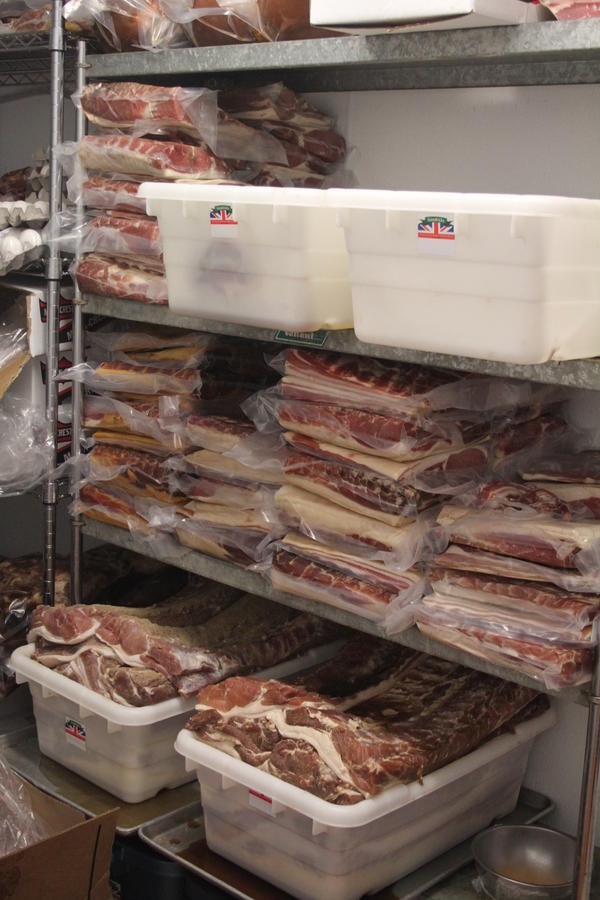
For me it is not cost effective to do zip lock bags, besides they do not make them big enough for my usage and as for storage space is at a premium as the turnover is between 200kg – 300kg a week

This is a shot of my overflow cooler, where the tubs are is just bacon being held in vacuum bags ready for slicing


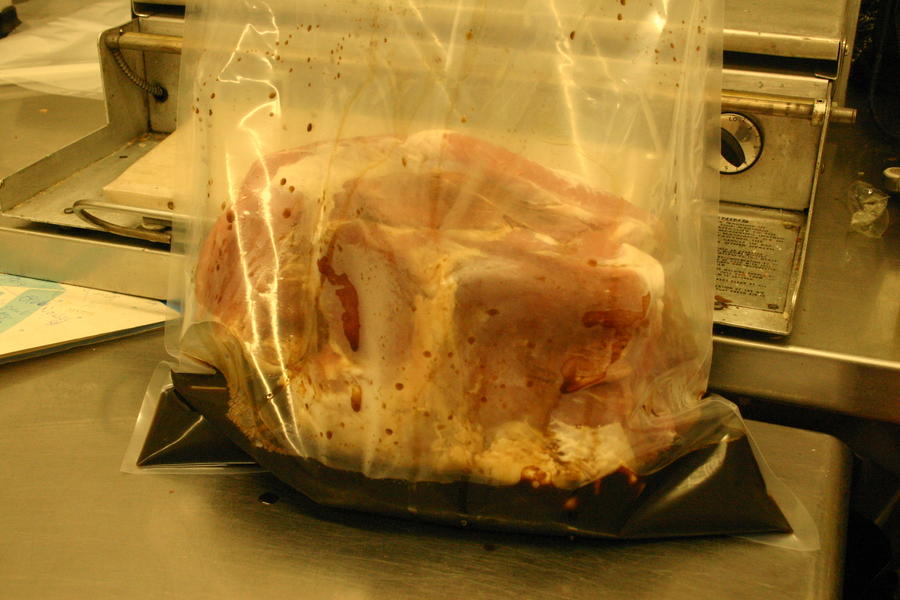
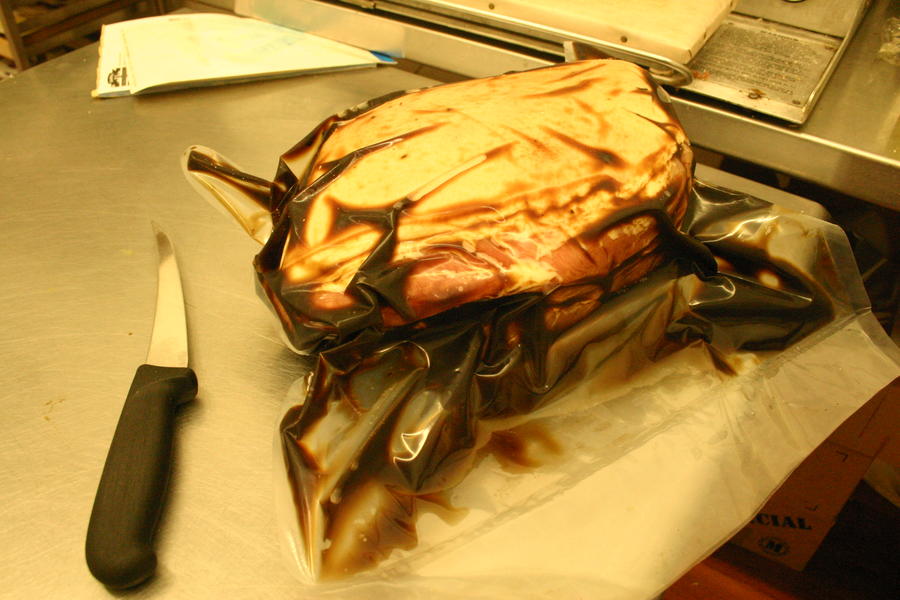
The one place it does help me (not using zip lock bags but vacuum bags) is when I do the custom orders that require high end items such as English/Irish ale or Whiskeys, to make brines up with either of these components would put the cost trough the roof (for a one off (?) home use it would be alright) so with my Suffolk hams as well as my Irish hams these are cured in vacuum bags    


WOW that looks like a commercial operation compared to my 4 lbs.  I haven't made any bacon in several years.It's just since joining this forum has reignited my interest. I agree, a lot of people cook bacon at too high a flame and over cook it. The brown sugar-maple bacon i made usually cooks best in the toaster oven.
 
SmokingMeatForums.com is reader supported and as an Amazon Associate, we may earn commissions from qualifying purchases.
Clicky