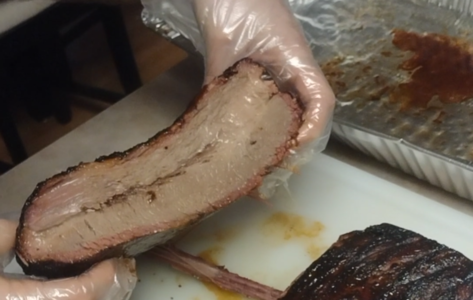
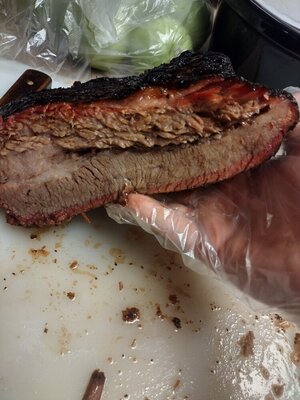
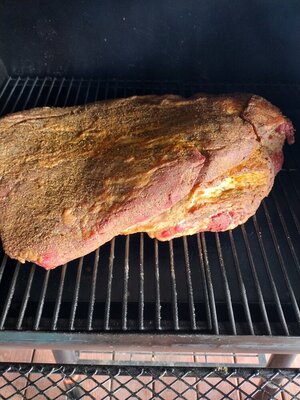
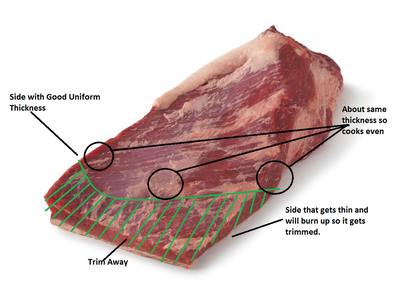
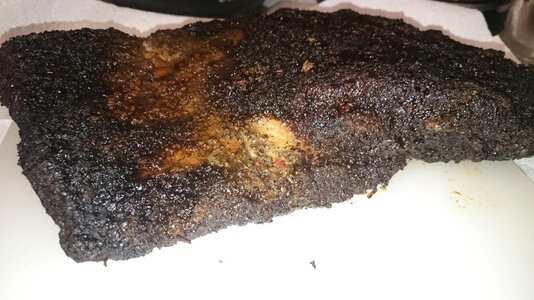
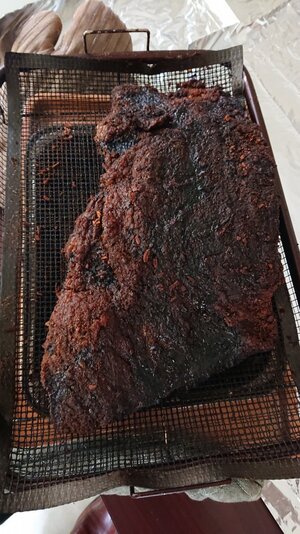
I know brisket is really difficult to cook but did alot different on my second attempt of brisket and thought it turned out good but still having the same problems. The bark wasn't sticky and thick but the first couple of pieces of flat cut good then started seemingly get tougher to cut and some of it was shredding and a bit chewy. The point sliced a little better and actually made good slices. I didn't spritz it but once or twice the whole cook. Put it fat cap down since I'm using a pellet smoker to help render the fat and take a brunt of the heat. Wrapped it in the butcher paper didn't stick. Probed it and it went right in like butter and then actually checked the temp and it said 210 in the point and 205 in the flat. I just don't know if it's my pellet smoker is just better of as a grill. I have some ribs to smoke tomorrow for a party as well and hopefully will have more success with that. Put pictures to show what it looked like done and if it's possible to see the smoker. It's got a burn pot with a heat deflector plate and then just one set of racks.
-
Some of the links on this forum allow SMF, at no cost to you, to earn a small commission when you click through and make a purchase. Let me know if you have any questions about this.
At a lost with brisket
- Thread starter JBCWCHS06
- Start date
SmokingMeatForums.com is reader supported and as an Amazon Associate, we may earn commissions from qualifying purchases.






SmokingMeatForums.com is reader supported and as an Amazon Associate, we may earn commissions from qualifying purchases.
Similar threads


SmokingMeatForums.com is reader supported and as an Amazon Associate, we may earn commissions from qualifying purchases.



SmokingMeatForums.com is a community of barbecue and outdoor cooking enthusiasts dedicated to smoking meat.
© 2004-2026 SmokingMeatForums.com
