Newbie RF build with pics and Questions

  • Some of the links on this forum allow SMF, at no cost to you, to earn a small commission when you click through and make a purchase. Let me know if you have any questions about this.
SmokingMeatForums.com is reader supported and as an Amazon Associate, we may earn commissions from qualifying purchases.
I 2nd the straight electric brake plan of action. The ability to stop is very under rated. PLEASE be careful when selecting your trailer brake system. Not all brake controllers are created equal.... If you decide to use an electric-over-hydraulic brake system on your trailer, be sure your brake controller is designed specifically for electric-over-hydraulic...  Some are, some are not..
 
Wiring not my strong suit. I might the Wiring for dummies on that setup, or at least pics. I will check out the prodigy, Thanks again
Most newer trucks have the backbone of the wiring installed at the factory.  Usually there is a plug under the dash and the wires run to a bundle and taped off near the back end.  You just buy the correct pigtail to go between the Prodigy and the plug under the dash and wire up the 7 pin plug in the back.  Any U-haul or RV trailer store will be more than happy to wire both the truck and the trailer for you and the price should not be too steep if you are not comfortable doing it yourself.

If your truck already has a hitch it should have at least the wiring for the lights installed.  You may only need the controller and the pigtail (it just depends on what you have though).

I have the original Prodigy, and I think they have two newer versions available now.  They are proportional controllers, which means they apply breaking power proportionally to the rate of vehicle deceleration.  Or if you slam on brakes because a car pulled in front of you, it will apply much higher braking force than if you brake normally.  Here is a link to their Prodigy P2 which looks like the replacement for my 11 year old Prodigy model.  They have some video clips there which might make the operation clearer.

http://www.tekonsha.com/content/products.aspx?lvl=3&parentid=1400&catID=1435&part=90885

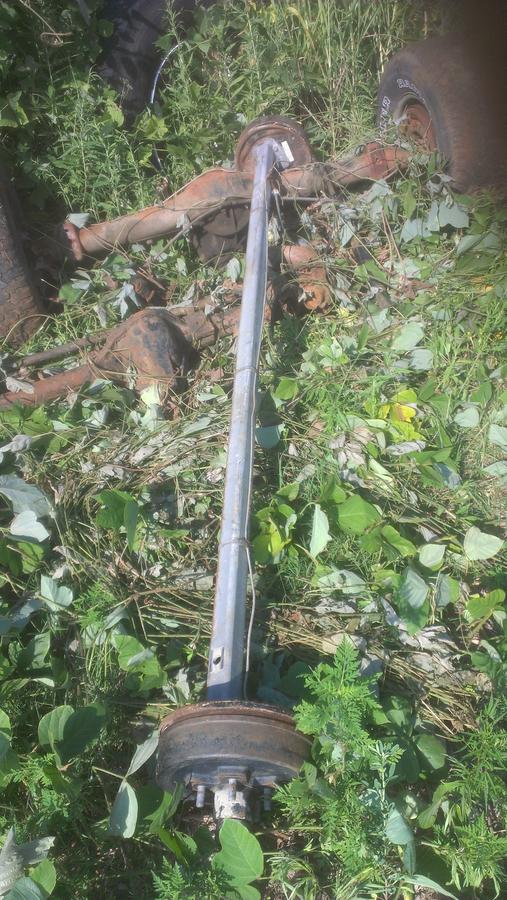
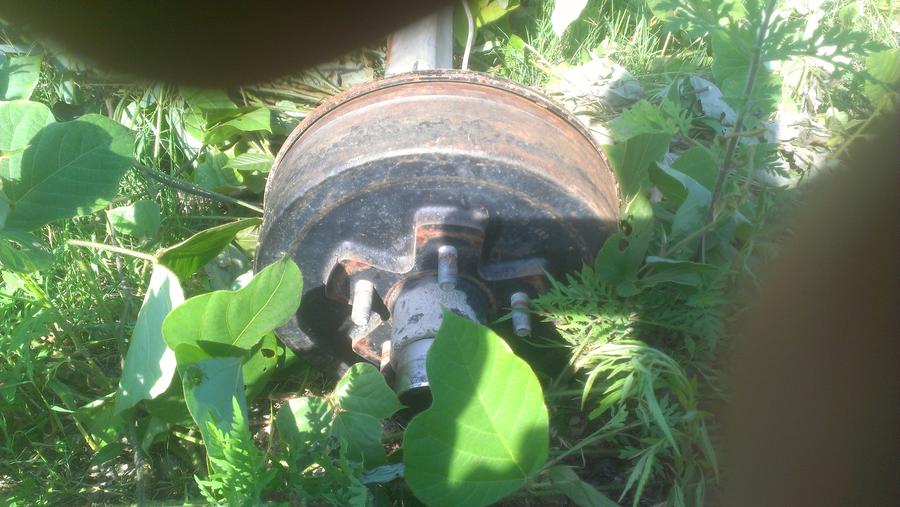
As to those two axles, you need to check the width to make sure they will work with your trailer. And you do know you will have to completely redesign the suspension and spring setup for the modified trailer with two axles from what you have now.  Depending on how much of the brake system in those hubs is still good you may be better off to just buy a trailer or pay someone who does this for a living to modify your trailer.  It just depends on your comfort level since you did not seem too sure about wiring.
 
Last edited:
Most newer trucks have the backbone of the wiring installed at the factory.  Usually there is a plug under the dash and the wires run to a bundle and taped off near the back end.  You just buy the correct pigtail to go between the Prodigy and the plug under the dash and wire up the 7 pin plug in the back.  Any U-haul or RV trailer store will be more than happy to wire both the truck and the trailer for you and the price should not be too steep if you are not comfortable doing it yourself.

If your truck already has a hitch it should have at least the wiring for the lights installed.  You may only need the controller and the pigtail (it just depends on what you have though).

I have the original Prodigy, and I think they have two newer versions available now.  They are proportional controllers, which means they apply breaking power proportionally to the rate of vehicle deceleration.  Or if you slam on brakes because a car pulled in front of you, it will apply much higher braking force than if you brake normally.  Here is a link to their Prodigy P2 which looks like the replacement for my 11 year old Prodigy model.  They have some video clips there which might make the operation clearer.

http://www.tekonsha.com/content/products.aspx?lvl=3&parentid=1400&catID=1435&part=90885


As to those two axles, you need to check the width to make sure they will work with your trailer. And you do know you will have to completely redesign the suspension and spring setup for the modified trailer with two axles from what you have now.  Depending on how much of the brake system in those hubs is still good you may be better off to just buy a trailer or pay someone who does this for a living to modify your trailer.  It just depends on your comfort level since you did not seem too sure about wiring.


That is true, I am more comfortable with fabrication than electrical . I think can handle the wiring as well. It appears that this axle is hydraulic , so Im not sure I want these as far as for the baking. I haven't ruled out adding a electric braking system to the one that doesn't have anything right now.
 
You are getting close to the point that it would be more economical to buy two new axles with electric brakes (on at least one axle depending on total weight), or just buy a trailer outright.  Trying to cobble together components can become a nightmare if you have not worked with this type of stuff before.  Plus the price for parts will add up (hubs with brakes, etc...).

Figure out about how much your steel components will weigh and add 30% fudge factor and then go look at new trailer prices with brakes professionally installed.  On that size truck I would say brakes are a must have and not optional.  Also make sure you are under both your towing capacity for the truck and the "gross combined vehicle weight" which is the total weight of the truck (loaded with all your gear and passengers) and the weight of the trailer.   Towing capacity for vehicles are measured with a 150 pound driver and nothing else in the vehicle (no gear, no passengers, no cooler of beer, no nothing - it's a very un-real world measurement, but that's the way the guberment has them do it).
 
  • Like
Reactions: fat bass bbq
No trailer brakes here either, works just fine.  Unless your going 500 gallon tank with warming box and the whole 9 yards like Solar Yellows build, I think you'll be ok without the brakes.


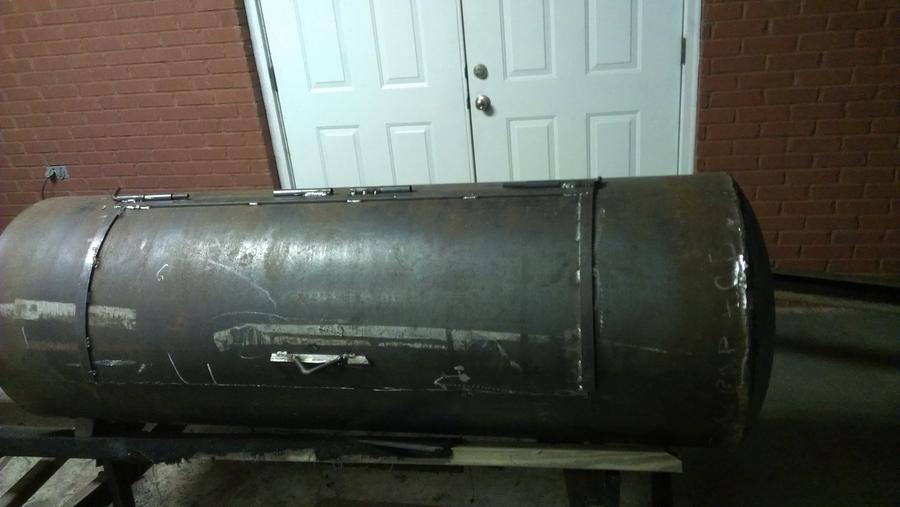
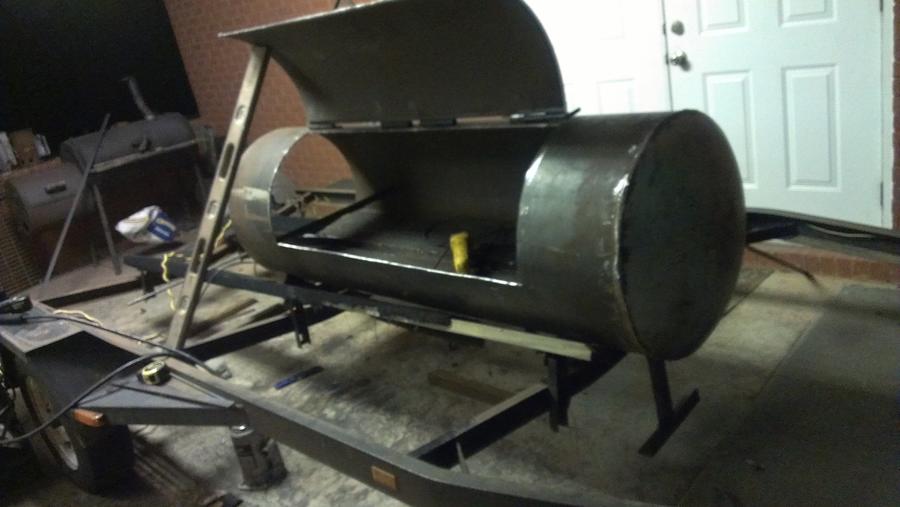
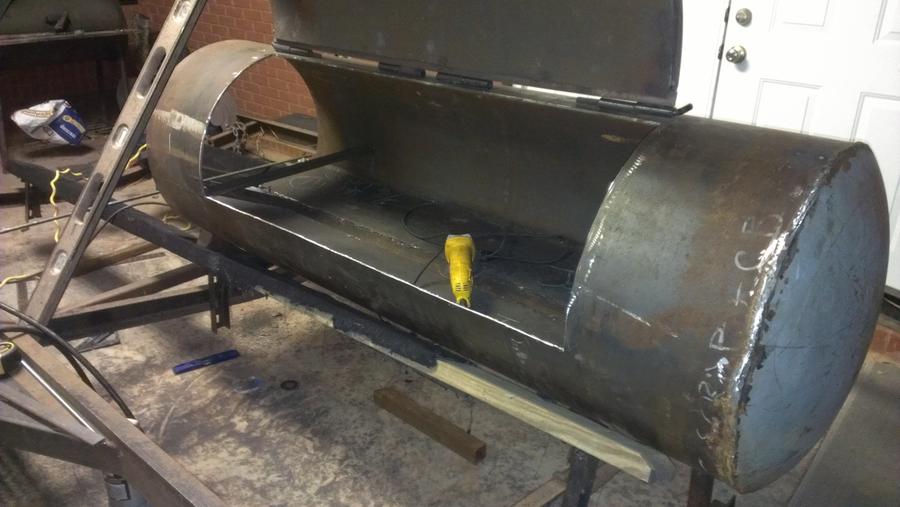
So I have cut the door,  welded the hinges, and started welding strips to door. I have decided to cut the door into 2 smaller doors and a 6" hinged strip in center. I was thinking 1 door was going to be too heavy but I wanted the ability to open the whole area. I have always wanted to cook a whole hog. So have the ability to open the whole area would be helpful. So my thinking is 2  21" doors and the 6" center strip. I will weld strips to top of doors and weld a piece inside to catch the strip. I

I cut the door with grinder and cutting wheel, I wasn't so straight with the plasma cutter. I might would have considered cutting with plasma cutter if I would have known how many blades I was going to need. Oh well, I have enjoyed the work anyway.
 
FB, evening..... sounds like you are on your way to a great BBQ Pit trailer....   I ran the numbers for your smoker....

The over sized firebox is no problem if you have room....  make room.... extra space under the fire grate is great for ash... less cleaning...

looks like the stack at 7" should extend 30"  above the smoke chamber for a margin of safety on moving hot air and smoke and extend it down to 4-6" above the lower grate....

Firebox inlet at 66" you might go to 70" just for margin...

Firebox to cook chamber opening figures at 176 sq in.... I would make it 190-200 for another margin...   Now how to figure it out when adapting to arcs...... 

On cardboard or something similar..(empty beer boxes is what I use).... Draw a series of 1"x1" squares maybe on a 28" x 20" sheet .....  Place it on the end of your smoke chamber and count squares....extra is no problem  

A couple other things that folks have done....  The area under the RF plate should be 1.5 times the area of the firebox/cook chamber opening... and the opening at the end of the RF plate should also be 1.5 times the FB/CC opening...  There is a friction loss of the smoke/air/heat traveling that distance and then taking a 180 deg turn to head toward the stack...  Just a precaution .....  

One other thing....  sliding the firebox into the smoke chamber maybe 1/2 of it's length will reduce heat loss from the firebox and put it into the smoke chamber... also when mounting the firebox to the smoke chamber, setting the height of the FB to the RF plate level, the firebox top can act as part of the RF plate, saving money ... 

All of this is subjective and just points to ponder.... There are many pits, folks on this forum have made, that are AWESOME and make great food....    The members on this forum are very knowledgeable and willing to help... 

I'm in for the build....  
popcorn.gif
....  I love smoker builds .....  Dave
 
Just a few more notes and / or additions to Daves' always on the money wisdom. 

Oversized firebox, can't go wrong there, mine is oversized by just a bit, so I was able to incorporate an ash pan under my charcoal / wood box, works great. 

For mapping out square inches, I just use graph paper, get your diameter, draw a circle with a compass on the graph paper that matches the diameter, then map out the sidth of your opening by the height and count your squares to get your area.  

My firebox is mounted at the level of my RF plate, inset into the tank about 6" to 8" or 1/4 to 1/3 of the length of the firebox (24").  This allowed me to use the top of the firebox as my point of reference for the RF plate.  As far as having 1.5 times more room under the RF plate as you have firebox to chamber opening, it is not totally necessary, my firebox opening is the exact amount of opening I have under my RF plate, works just fine.  Now, the opposite end is larger than the opening both from the box to the chamber and also larger then the area under the RF plate, not exactly 1.5 bigger but larger for sure. 

Your build is looking great so far.
 
Nice looking setup u have going!! I think fire bricking the firebox is unnecessary. Travel and transit, constant heating and cooling are gonna make u a brick mason instead of a fireman!! Be sure u add a drain on the bottom with a simple ball valve. Cant wait to see the finished pictures!!
 
FB, evening..... sounds like you are on your way to a great BBQ Pit trailer....   I ran the numbers for your smoker....
The over sized firebox is no problem if you have room....  make room.... extra space under the fire grate is great for ash... less cleaning...
looks like the stack at 7" should extend 30"  above the smoke chamber for a margin of safety on moving hot air and smoke and extend it down to 4-6" above the lower grate....
Firebox inlet at 66" you might go to 70" just for margin...
Firebox to cook chamber opening figures at 176 sq in.... I would make it 190-200 for another margin...   Now how to figure it out when adapting to arcs...... 
On cardboard or something similar..(empty beer boxes is what I use).... Draw a series of 1"x1" squares maybe on a 28" x 20" sheet .....  Place it on the end of your smoke chamber and count squares....extra is no problem  
A couple other things that folks have done....  The area under the RF plate should be 1.5 times the area of the firebox/cook chamber opening... and the opening at the end of the RF plate should also be 1.5 times the FB/CC opening...  There is a friction loss of the smoke/air/heat traveling that distance and then taking a 180 deg turn to head toward the stack...  Just a precaution .....  
One other thing....  sliding the firebox into the smoke chamber maybe 1/2 of it's length will reduce heat loss from the firebox and put it into the smoke chamber... also when mounting the firebox to the smoke chamber, setting the height of the FB to the RF plate level, the firebox top can act as part of the RF plate, saving money ... 
All of this is subjective and just points to ponder.... There are many pits, folks on this forum have made, that are AWESOME and make great food....    The members on this forum are very knowledgeable and willing to help... 
I'm in for the build....  :popcorn ....  I love smoker builds .....  Dave

Hey Dave
I have already installed the reverse flow plate. It is 5.75 from bottom at center and 20.5 wide. I think that will leave me short. How much of a issue is that going to cause?
Thanks
 
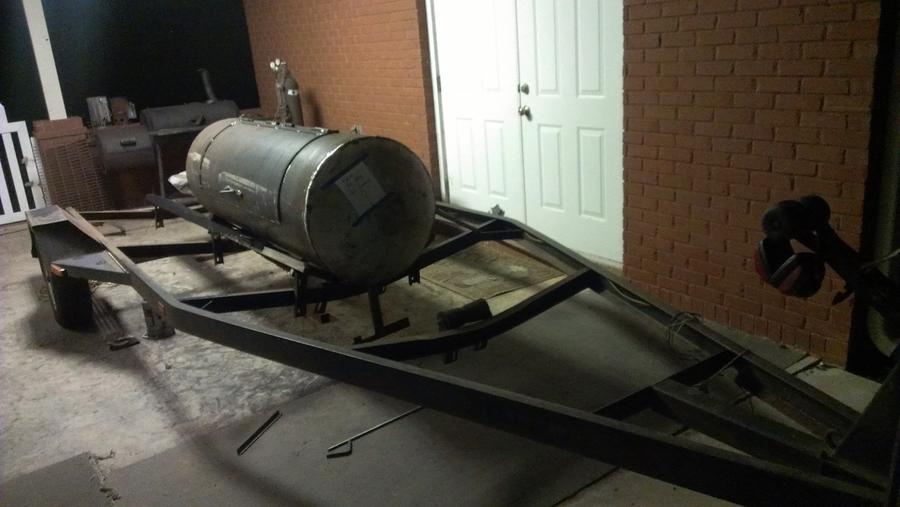
Well after seeing the latest photos, that is no as big as I first thought it was (in comparison to the trailer especially).  May not need brakes after all, but I would double check the weight vs the rating on the single axle.

Going to be nice.
 
Well let me lay it out for you guys. Thanks to my brothers here at smoking meat, we were able to catch a problem before it was to far. My RFP was to low and my box is to big. FB no big deal if you have enough space under RFP, I'm guessing. We finally got the old plate cut out and that took all day. We had some issues with our plasma cutter. Started work about 3pm and ended around 730pm. I really have unreal expectations I guess for how much we can get done in one day. I was hoping to finish my doors, to CC, weld angle iron to boat trailer to level floor, and get the RFP cut out and moved up an 1" or 2".  As said before we did get RFP cut out, and boy I really made a mess cutting it out, oh well more welding and grinding I guess. We got the the 3"x3" angle iron welded in place on trailer. We started at the further-est point, closest to the tongue, right before it starts to narrow. It is about 10' from that point to rear. We placed the AI on 2' centers and stopped at the last 2 piece, bc I am not sure how and where the FB will come into play. I am tired of work and then tearing out and re-working. That is where we stopped for the day. Let me say thanks to Mr. Dave who has been a Huge help and has made this a lot easier.

Now let me ask this. What the benefit or issues I might have by making the smoker to where I cook standing on the trailer compared to standing on the ground. I know It wont have bearing on the smoker performance but was interested in pros or cons on operations. If y'all remember this a 22.5" trailer for rear to tongue. I have about a 6' x 10' platform which to build. The reason I am considering changing from my original ideas is, my FB box is a 28" cube, and my CC is 26". Then you add legs + trailer height, that puts me roughly about 42" to cooking grate. Which is fine but if I add one more rack or grate for ribs and what not, feel like I am going to be taller than I would prefer. I am not 100% sure but I am just thinking. So, please weigh in if you have some advice to either plan. Bruno I know I told I liked your setup and I still may go that way. I just haven't cooked at many events and not sure if there is a benefit to being on the trailer vs ground work. 

Alright that's for hearing me out. I am tired and I am at the FD tonight so I am praying for a quiet night with no calls. I will look forward to your comments.

Fat Bass BBQ
 
My last trailer rig was built with a screen room and I had to climb up on the smoker trailer everytime to load wood or check the meat. I hated it. Thats why I got rid of it and am building this new one to load everything from the ground. I like it much better.   The firebox does not have to sit above the deck, you can lower it down and sit the smoker lower on the trailer.
 
Convienience is not over rated.  The up and down of getting on a trailer and off a trailer is a hassle.  Your young enough now to handle it, but you might wish you'd done it different down the road.  Set the smoker up where the firebox butts up against the rear of the trailer and put a weld on it. 
 
SmokingMeatForums.com is reader supported and as an Amazon Associate, we may earn commissions from qualifying purchases.

Latest posts

Hot Threads

Clicky