FrannaM
Fire Starter
- Jul 21, 2026
- 39
- 90
Just wanted to share my method and recipe for making biltong.
As soon as we moved to the US, I knew I’d have to make a plan to make my own biltong. I’ve been using this recipe for the past two years and, in my opinion, it works really well.
The cut of meat in the pictures is a chuck roast that was quite lean and fairly uniform in size. This is not the traditional cut of meat used for biltong. Bottom round, top round, or eye of round will probably give you better results, but chuck actually works surprisingly well. 1" - 1.25" thickness is what I normally go for. Too thick and you may risk the meat taking too long to dry and go bad.
I like thicker pieces because I prefer my beef biltong quite moist. Cutting with the grain can be a little more difficult with chuck, but it still works.
My process:
My homemade biltong box runs at normal room temperature, and I’ve never had problems with mold or anything similar. Just avoid drying biltong in a humid environment.
Also, do not spend a fortune on a fancy biltong box. You can easily build your own in about 1–2 hours, and pretty much everything you need is available on Amazon. You want the air intake in the bottom of the box and the fan to extract the air through the top. A variable speed fan works best.
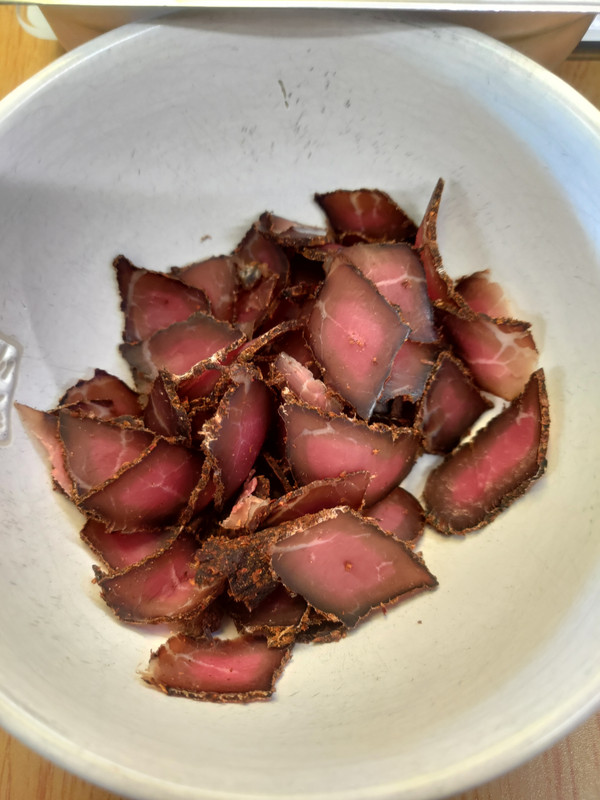
The biltong in the bowl is from a previous batch.


As soon as we moved to the US, I knew I’d have to make a plan to make my own biltong. I’ve been using this recipe for the past two years and, in my opinion, it works really well.
The cut of meat in the pictures is a chuck roast that was quite lean and fairly uniform in size. This is not the traditional cut of meat used for biltong. Bottom round, top round, or eye of round will probably give you better results, but chuck actually works surprisingly well. 1" - 1.25" thickness is what I normally go for. Too thick and you may risk the meat taking too long to dry and go bad.
I like thicker pieces because I prefer my beef biltong quite moist. Cutting with the grain can be a little more difficult with chuck, but it still works.
My process:
- Cut the meat with the grain into fairly thick strips.
- Give the meat a malt vinegar bath, then let the excess vinegar drip off.
- Coat each piece on all four sides with biltong spice. I use Biltongmate Traditional, and in my opinion it’s on par with the traditional biltong spice you get in South Africa.
- Lay the pieces flat in a container, close it, and leave them overnight in the fridge. This allows the meat to marinate further.
- The next day, hook the pieces and hang them vertically in the biltong box.
- I run my extractor fan on medium. The biltong in the pictures took about 6 days to reach the level of dryness I like.
My homemade biltong box runs at normal room temperature, and I’ve never had problems with mold or anything similar. Just avoid drying biltong in a humid environment.
Also, do not spend a fortune on a fancy biltong box. You can easily build your own in about 1–2 hours, and pretty much everything you need is available on Amazon. You want the air intake in the bottom of the box and the fan to extract the air through the top. A variable speed fan works best.
The biltong in the bowl is from a previous batch.